
Table of Contents
We would never consider treating military pilots like we educate students, handing them textbooks instead of joysticks, giving them pages instead of real controls, and expecting them to fly a multi million-dollar jet when they graduate. We make them memorize formulas instead of solving real problems. We ask them to dissect frogs instead of simulating ecological crises or genetic research.
Meanwhile, the world has changed. Automation, generative AI, climate challenges, bio engineering, data science, and global competition demand skills that textbooks can no longer convey. Yet our institutions K–12 and higher ed remain locked in a half-century old paradigm: seat-time, lectures, end-of-term tests, and diplomas that often mean little once the student enters the workforce.
To continue this way is institutional negligence. If we do not act fast we are failing not just students, but our nation’s capacity to compete, innovate, and adapt.
Why Simulators, Virtual Labs & AI-Driven Training Are No Longer Optional — They Are Imperative
Across domains as diverse as pilot training, medical education, engineering, and disaster-resilient architecture, simulation-based learning (SBL) has proven vastly superior to traditional textbook-based instruction in generating real-world readiness, safety, engagement, and complex problem-solving skills.
- In medical and nursing education, systematic reviews show SBL consistently enhances clinical skills, decision-making, communication, confidence, and safety — all while avoiding risks to real patients.
- For STEM fields outside medicine, virtual labs have been shown capable of producing equivalent or better conceptual understanding and performance than traditional labs.
- A broad meta-analysis covering 145 empirical studies across higher education found that simulation-based learning produces a large positive effect (g = 0.85) on acquisition of complex skills — far beyond what passive lecture or textbook learning delivers.
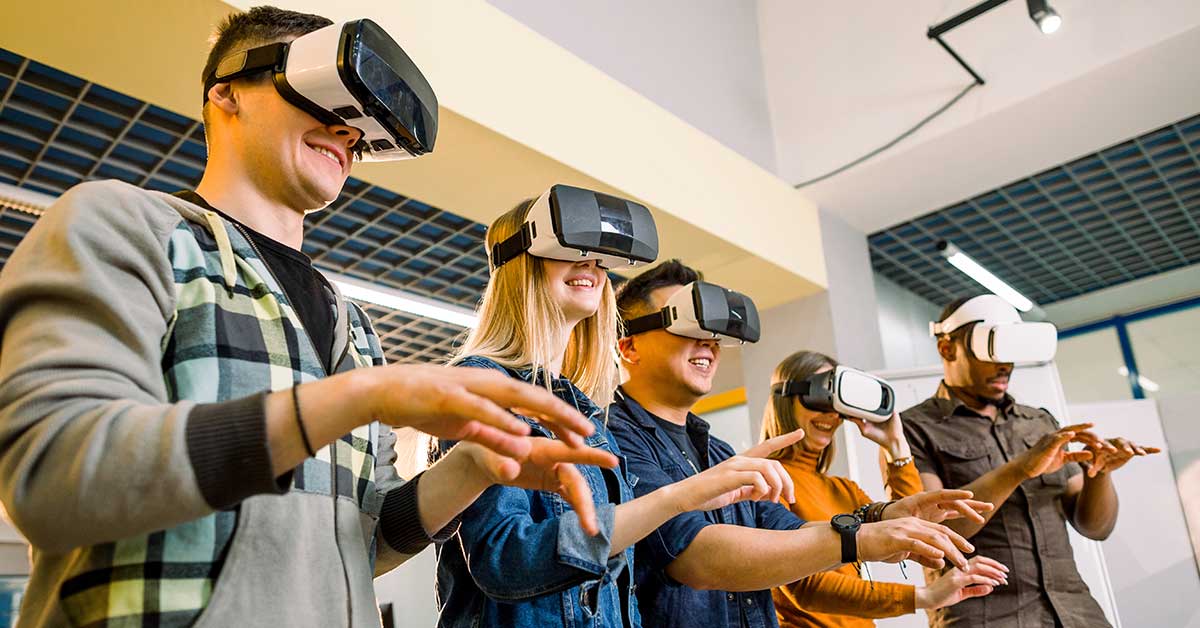
- Immersive virtual reality (VR) classrooms are gaining traction: very recent research (2025) reports that VR-based lessons significantly improve student concentration, engagement, emotional presence, and knowledge mastery relative to traditional video or lecture-based teaching.
- Simulation-based learning also supports soft skills, collaboration, real-world problem-solving, and critical thinking — capabilities that industry repeatedly cites as lacking in many graduates.
In short: simulators and virtual labs are no longer niche tools — they are among the most effective pedagogical methods available for preparing students for real-world complexity and uncertainty.
Real U.S.-Relevant Case Studies and Action Research That Prove the Point
Here are five concrete, recent (or recently validated) U.S.-relevant or broadly applicable studies that show simulation-based learning is not just desirable — it is essential.
1. Virtual Labs Reduce Drop-Failure Rates and Raise STEM Persistence in Higher Education
A 2023 study implementing virtual laboratory simulations across STEM courses at a U.S. college documented a significant reduction in D (drop), F (fail), and withdrawal rates, and improved course grades particularly in physics and chemistry courses where traditional labs often drive high failure.
Implication: Students often struggle in textbook-based lectures and physical labs; virtual labs can rescue student retention, lower failure rates, and sustain interest in STEM critical for a pipeline of future engineers, scientists, and technologists.
2. K–12 Simulation Use in Science & Math Teacher Education (Preparing Teachers for Real Classrooms)
At a national “teacher education simulation conference,” education researchers reported that simulations even before deployment in real classrooms help prospective teachers rehearse complex instructional practices in science and math. These “mock-classroom” simulations provide a safe, repeatable space to build competence before they encounter real students.
Implication: If we expect future generations to learn through active, problem-based simulation, we must first train teachers via simulation not textbooks ensuring quality instruction, especially in under-resourced or challenged districts.
3. Immersive VR Lessons Boost Engagement and Knowledge Mastery
A 2025 experimental study on VR-based education (outside of medicine) demonstrated that students using a fully immersive VR teaching system scored significantly higher on concentration, course mastery, and emotional engagement than those in traditional video or classroom instruction.
Implication: For subjects like biology, chemistry, geology, environmental science, math, even language arts — immersive VR can transform abstract content into lived, meaningful experience, increasing comprehension, retention, and motivation far beyond textbooks.
4. Simulation-Based Learning Produces Better Clinical Readiness in Higher Ed
In nursing education, a 2025 study of undergraduates (n = 112) found that after simulation-based education, students reported dramatically higher communication skills, confidence, self-efficacy, and readiness to handle real-world clinical scenarios compared to traditional lecture-based training.
Implication: If simulation works for high-stakes fields like medicine, where mistakes can be fatal it can and should be adapted for all disciplines where real-world competency and judgment matter: environmental science, engineering, infrastructure, public health, disaster response, etc.
5. Simulation-Based Learning Meta-Analysis Shows Broad Effectiveness Across Disciplines
The 2020 meta-analysis of 145 studies concluded that simulation-based learning yields large effect sizes on skill acquisition, problem-solving, situation management, communication and collaboration skills across varied domains including management, science, engineering, and health — not just vocational or medical training.
Implication: This isn’t about one niche area — simulation works broadly across disciplines. Any educational program relying solely on textbooks is likely producing graduates unprepared for today’s complex, fast-changing work environments.
Why We Keep Doing What Doesn’t Work — and That’s Part of the Problem
We cling to textbooks and seat-time for many reasons: tradition, ease, cost structure, accreditation frameworks, and inertia. Old-guard leadership insists that rigor equals pages read and tests passed. But that mindset ignores decades of evidence and ignores today’s reality:
- The world no longer advances at the pace of a semester or a school year it moves at the pace of a software update, a climate disaster, a global supply-chain disruption, or an AI breakthrough.
- Textbooks, lecture halls, and static curricula deliver knowledge but rarely competence, adaptability, soft skills, or readiness for novel problems.
- Many educators, especially in under-resourced districts, lack training or support to implement active, simulation-based methods.
- Accreditation systems, funding formulas, standardized testing regimes, and teacher-prep programs are all optimized around seat-time and traditional metrics not real-world skills or job-readiness.
This generational ignorance the belief that “traditional is best” is no longer defensible. It is damaging.
What Education Leaders, Policy-Makers, and Institutions Must Do Immediately
1. Commit to Simulation-Based Curriculum Redesign
Replace or supplement lecture-based, textbook-driven courses with simulation-rich, problem-based, immersive learning especially in STEM, environmental science, engineering, math, humanities, and soft-skills training. Expand virtual labs, VR environments, serious games, and AI-driven simulations across K–12 and higher ed.
2. Build Infrastructure and Partnerships for Real-World Learning
Partner with industry, government agencies, nonprofits, and community organizations to create real-world simulation labs: energy, sustainability, biotech, logistics, urban planning, disaster response, clean energy, robotics, and more placed where students live, minimizing barriers and maximizing local economic impact.
3. Train Teachers and Faculty to Facilitate, Not Lecture
Move teacher-prep and faculty development away from didactic instruction to simulation-based rehearsal, reflective debriefing, adaptive feedback, and real-time data-driven instruction.
4. Rethink Accreditation, Funding, and Accountability Around Competence, Not Seat-Time
Redesign accreditation and funding models so that they reward institutions for demonstrable student competencies, job-readiness, problem-solving, retention, and equity not just enrollment numbers, credit-hours, or graduation rates.
5. Prioritize Equity — Make This Accessible to Every Community
Ensure rural, tribal, low-income, and marginalized communities get access to virtual labs, low-cost VR systems, mobile simulation units, and partnerships so that economic development and workforce readiness are not limited to privileged or urban areas.
The Cost of Failure: We Are Choosing Decline by Default
Every semester we graduate students who cannot think critically, solve real problems, or adapt to complexity, despite rising tuition, debt, and hope. That’s not just a missed opportunity — that’s malpractice.
Failing to adapt will result in:
- A shrinking pool of job-ready STEM and tech talent
- A nation unable to meet demands for clean energy, infrastructure, public health, and innovation
- Widening inequality as only privileged students gain access to real competencies and economic mobility
- Institutions becoming irrelevant, obsolete, or worse harmful
If we continue to rely on textbooks and seat-time, we are choosing stagnation.
Conclusion: The Urgent, Non-Negotiable Imperative
We don’t need more textbooks. We need living, breathing learning ecosystems. We don’t need more lectures. We need immersive, scenario-driven, problem-solving simulators that prepare students for real life not exams.
If you lead a school district, a college, a university, or influence policy your failure to act on this represents a dereliction of duty to students, communities, and the future of our nation.
We must commit, now, to rebuilding education around competence, not credit. Reality, not repetition. Action, not antiquity.
The time for incremental reform is over. The time for transformation is now.
References
Alharbi, A., & colleagues. (2024). The effectiveness of simulation-based learning on skill acquisition in nursing education. BMC Medical Education.
Chernikova, O., Heitzmann, N., Stadler, M., Holzberger, D., & Seidel, T. (2020). Simulation-based learning in higher education: A meta-analysis of complex skill acquisition across domains. Review of Educational Research, 90(5), 707–743.
Jallad, S. T. (2025). Simulation-based education improves communication, confidence, and critical thinking among nursing students. Journal of Nursing Education and Practice.
Leal-Costa, C., & colleagues. (2024). High-fidelity simulation enhances evidence-based practice competencies in health professions education. Journal of Interprofessional Care.
Liu, C., Meng, S., Zheng, W., & Zhou, Z. (2025). Immersive virtual reality classrooms: Effects on student concentration, engagement, and knowledge mastery. Journal of Educational Technology & Society.
Reginald, G. (2023). Teaching and learning using virtual labs: A review of effectiveness in higher education. Cogent Education, 10(1).
Schechter, R. L. (2023). Virtual lab implementation model predicts improved outcomes in STEM higher education. Proceedings of EdMedia + Innovate Learning Conference.
Whitlock, J. A. (2017). A virtual learning system’s impact on student achievement and personalized mastery. University of South Carolina Dissertation.
Mikeska, J. N., Howell, H., Dieker, L., & Hynes, M. (2021). Understanding the role of simulations in K–12 mathematics and science teacher education. Contemporary Issues in Technology and Teacher Education, 21(3).