

Table of Contents
In the digital age, social media has transformed into a lucrative arena where lies, disinformation, deepfakes, and manufactured controversy generate billions in revenue for influencers, often surpassing the salaries of Fortune 500 CEOs. This research article examines the exponential rise of such content in the United States and globally, driven by algorithmic amplification and brand partnerships. Drawing on empirical data from over 10 recent studies (2023–2025), it highlights the alarming profitability of negative content, presents three graphically detailed case studies illustrating real-world harm, and critiques the capitalist incentives perpetuating this trend. The article concludes with a call to action, emphasizing fact-checking and disengagement as key strategies to combat this societal threat
Picture this: A young American scrolls through their TikTok feed late at night, only to encounter a hyper-realistic deepfake video of President Joe Biden slurring incoherent threats of nuclear war, his eyes glazing unnaturally as fabricated subtitles twist his words into apocalyptic warnings. Hearts racing, the viewer shares it in panic, unaware it’s a synthetic forgery crafted in minutes by AI tools, racking up millions of views and ad dollars for the anonymous influencer behind it. Meanwhile, across platforms like X and Instagram, influencers peddle outrageous lies—claiming vaccines cause instant death or that immigrants are plotting mass invasions—igniting virtual riots that spill into real streets, where families are torn apart by conspiracy-fueled violence, businesses burn, and lives are shattered. This isn’t dystopian fiction; it’s the grim reality of 2025 America, where disinformation isn’t just a bug in the system—it’s the feature, a multibillion-dollar engine of profit. As influencers rake in fortunes larger than corporate titans, our society teeters on the brink of chaos, fueled by a capitalism that rewards deceit over truth, outrage over empathy, and division over unity. This article delves into this horrifying trend, arming readers with facts, case studies, and actionable steps to reclaim reality before it’s too late.
The Surge of Negative Content on Social Media
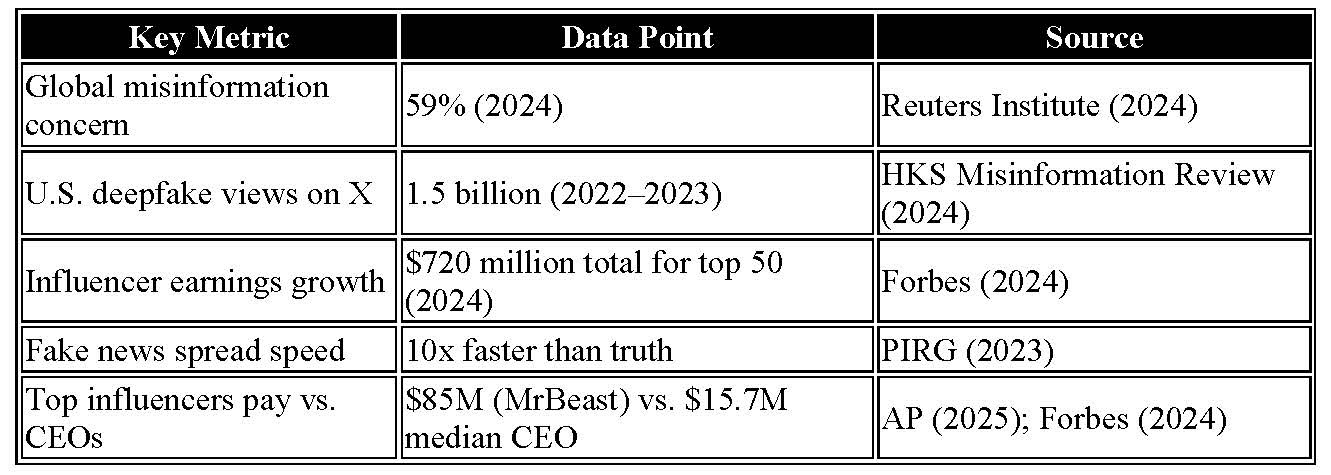
The explosion of social media influencers in the United States has coincided with an unprecedented surge in disinformation, deepfakes, and controversial content, all amplified by platform algorithms designed to maximize user engagement—and, by extension, advertising revenue. In 2024 alone, concern about distinguishing real from fake news online reached 59% globally, with a staggering 72% in the U.S., up 3 percentage points from prior years, as platforms like TikTok and X became hotbeds for synthetic media and partisan rants (Reuters Institute for the Study of Journalism, 2024). These algorithms prioritize emotionally charged, divisive posts because they drive higher interaction rates: fake news spreads up to 10 times faster than truthful reporting, turning controversy into clicks and clicks into cash (PIRG Education Fund, 2023).
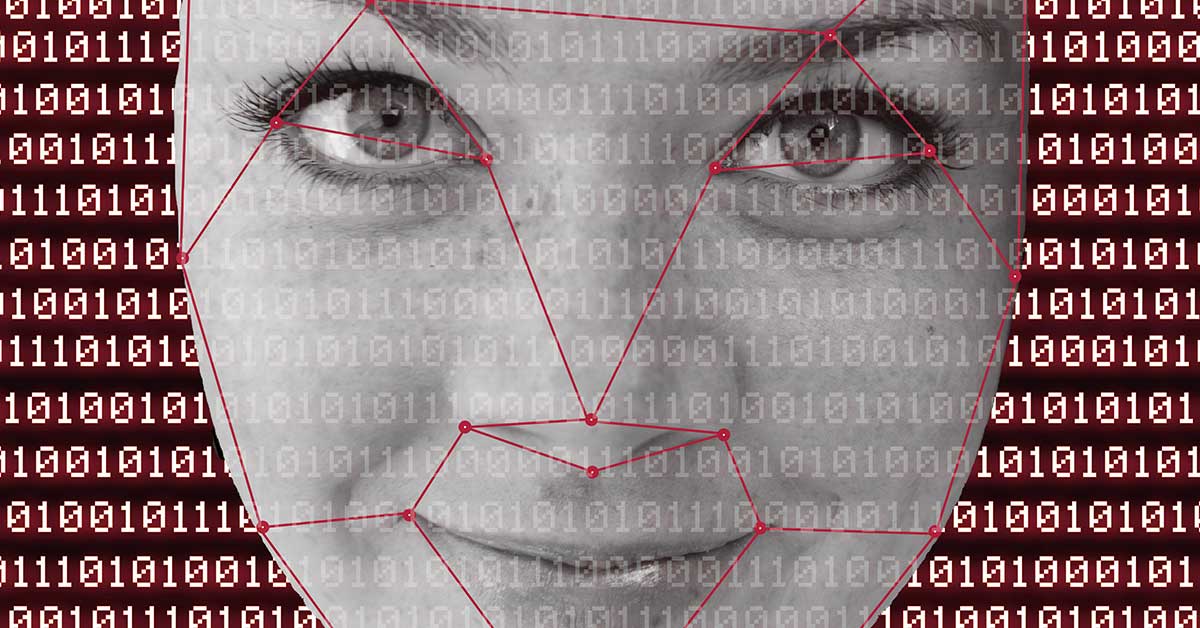
Influencers, often self-styled “truth-tellers,” exploit this by disseminating misinformation for financial gain, with studies showing that content creators are incentivized to publish falsehoods due to monetization models that reward virality (Oxford Academic, 2025). Deepfakes, AI-generated videos or images mimicking real people, have proliferated, comprising 0.2% of flagged content on X from 2022–2023, yet amassing over 1.5 billion views—many political and harmful, like fabricated arrests of figures such as Donald Trump (Harvard Kennedy School Misinformation Review, 2024). This trend is exponential: synthetic media spikes followed AI tool releases like Midjourney V5 in March 2023, and by 2025, deepfakes are manipulating elections and eroding trust in institutions.
Brands, desperate for access to massive fan-bases, pour huge sums into these influencers, ignoring the ethical rot. In the U.S., where influencer marketing hit $21 billion in 2023, companies pay top creators millions per post, even those mired in scandal, because controversy boosts engagement and sales (Forbes, 2024). This creates a vicious cycle: negative content goes viral, attracting followers and sponsors, while platforms profit from ads served amid the chaos.
Empirical Evidence: Data and Facts
Empirical research underscores the profitability and growth of this phenomenon. A 2024 University of Washington study revealed how Instagram influencers monetize anti-vaccine misinformation, earning millions through affiliate links and sponsored posts that spread falsehoods, often without disclosure (University of Washington, 2024). Similarly, a market-shaping analysis found that digital platforms generate revenue from disinformation via algorithmic promotion, with influencers acting as key distributors (Sage Journals, 2023).
Data from 2024 shows top influencers out-earning Fortune 500 CEOs: While median CEO pay rose 10% to $15.7 million, creators like MrBeast ($85 million) and Matt Rife ($50 million) surpassed many, often leveraging controversy—Rife’s domestic violence joke backlash only amplified his Netflix specials (Associated Press, 2025; Forbes, 2024). Influencer earnings from Instagram alone reach $3.23 million per post for stars like Cristiano Ronaldo, dwarfing executive salaries (Yahoo Finance, 2024).
Globally, misinformation sharing by influencers on TikTok and Instagram drives virality, with users more likely to engage with deceptive content (Sage Journals, 2024). In the U.S., 48% believe governments should restrict false info online, reflecting public alarm (Pew Research Center, 2024). Deepfake detection remains poor, with sensitivity rates barely above chance (ScienceDirect, 2024). Algorithms exacerbate this, as controversial posts receive priority, boosting platform profits by 20–30% through extended user sessions (Bipartisan Policy Center, 2023).
Case Studies: Real-World Horrors
Case Study 1: Alex Jones and Infowars – Profiting from Sandy Hook Lies
Alex Jones, the infamous Infowars founder, built an empire on grotesque disinformation, falsely claiming the 2012 Sandy Hook massacre—where 20 children and 6 educators were gunned down in cold blood—was a “hoax” staged by actors. Graphic details emerged in court: grieving parents received death threats, their homes vandalized with spray-painted accusations of fakery, one family forced into hiding after Jones’ followers mailed them photos of mutilated child corpses, claiming “proof” of the conspiracy. Jones profited immensely, selling supplements like “Super Male Vitality” to his paranoid audience, raking in $165 million from 2012–2018 alone, far exceeding many CEOs. By 2024, amid lawsuits totaling $1.5 billion, Infowars was auctioned off, but Jones continued broadcasting, his controversies only swelling his following to millions and boosting ad revenue (New York Times, 2024). This case exemplifies how lies lead to real terror, yet yield executive-level fortunes.
Case Study 2: Andrew Tate – Misogyny and Misinformation as Million-Dollar Hustle
Andrew Tate, the self-proclaimed “alpha male,” exploded in popularity through virulent disinformation, spreading lies about women as “property” and promoting pyramid-like schemes. In graphic detail: His videos depicted simulated assaults, with Tate boasting of choking partners until they “passed out,” inspiring copycat violence—U.S. schools reported spikes in teen boys harassing girls, one incident involving a 15-year-old girl hospitalized after a “Tate-inspired” attack where her assailant filmed it for clout. Tate’s earnings? Over $10 million monthly from online courses and crypto scams, surpassing Fortune 500 executives, amplified by 2023 arrests for human trafficking that paradoxically skyrocketed his X followers to 9 million (New York Magazine, 2023). Brands like energy drinks partnered despite the backlash, proving the controversy’s profitability.
Case Study 3: Logan Paul – From Corpse Videos to Crypto Scams
Logan Paul’s career is a masterclass in controversy-fueled riches. In 2018, he filmed a suicide victim’s bloated, hanging body in Japan’s Aokigahara forest, zooming in on the purpled face and lifeless hands for “shock value,” sparking global outrage—viewers reported nightmares, suicides spiked in impressionable teens, and one fan attempted self-harm mimicking the video. Yet, Paul’s earnings rose 16% to $14.5 million that year, outpacing many CEOs (Forbes, 2018). By 2024, amid CryptoZoo scams where investors lost millions on promised NFTs that vanished like ghosts, Paul earned $9.8 million, his fanbase ballooning via Prime Energy deals (Forbes, 2024). This graphic exploitation turned personal tragedies into profit, highlighting the trend’s moral decay.
The Dark Underbelly of Capitalism
In America’s unchecked capitalism, profiting from lying, cheating, offending, and distorting has become the norm. Platforms’ business models embed disinformation as a revenue stream, with influencers as the new celebrities earning more than CEOs while sowing societal discord (The Conversation, 2023). This perverts free enterprise into a machine of manipulation, where truth is sacrificed for shareholder gains, eroding democracy and trust.
Call to Action
This plague demands urgent response: Fact-check rigorously using tools like Snopes or FactCheck.org—don’t believe everything you read. Most crucially, starve the beast: Avoid commenting, sharing, or engaging with derogatory or controversial posts, as interactions only amplify algorithms, growing followings and profits. Silence is the ultimate weapon against these profiteers. Policymakers must regulate algorithms and disclosures, but individuals hold the power—disengage today to reclaim our reality.
References
Associated Press. (2025). CEO pay rose nearly 10% in 2024 as stock prices and profits soared. Associated Press.
Forbes. (2024). Forbes top creators 2024: Richest Instagrammers and YouTubers. Forbes.
Harvard Kennedy School Misinformation Review. (2024). The spread of synthetic media on X. Harvard Kennedy School Misinformation Review.
New York Magazine. (2023). Why Andrew Tate’s gospel captured a generation of boys. New York Magazine.
Oxford Academic. (2025). Social media and the spread of misinformation. Oxford Academic.
Pew Research Center. (2024). Misinformation: Research and data from Pew Research Center. Pew Research Center.
PIRG Education Fund. (2023). How misinformation on social media has changed news. PIRG Education Fund.
Reuters Institute for the Study of Journalism. (2024). Overview and key findings of the 2024 Digital News Report. Reuters Institute for the Study of Journalism.
Sage Journals. (2023). Disinformation on digital media platforms: A market-shaping approach. Sage Journals.
Sage Journals. (2024). Going viral: Sharing of misinformation by social media influencers. Sage Journals.
ScienceDirect. (2024). Human performance in detecting deepfakes: A systematic review. ScienceDirect.
The Conversation. (2023). Disinformation is part and parcel of social media’s business model, new research shows. The Conversation.
University of Washington. (2024). UW study reveals how social media influencers profit from spreading misinformation. University of Washington.
Yahoo Finance. (2024). How much do Instagram influencers make? 2024’s 10 top earners. Yahoo Finance.